The Open Knowledge Mission
Wikipedia
Building the world's largest free encyclopedia in every language, one article at a time.
300M+
People Reached
50+
Volunteers & Editors
30+
Languages Served
15+
Years of Contribution
Project SWASTHA
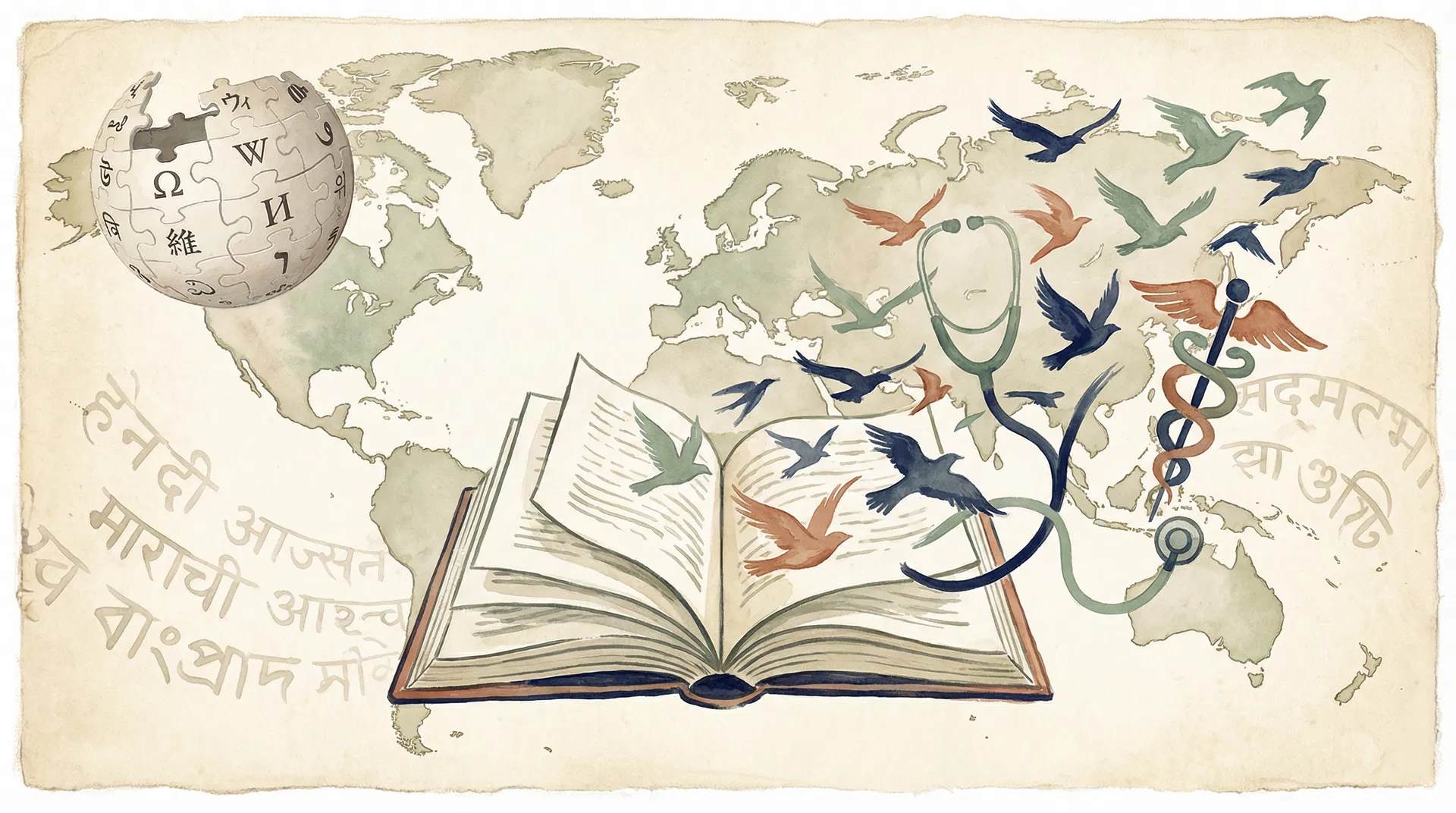
When COVID-19 hit India in 2020, something became painfully clear: millions of people were searching for health information online, but most of it was only available in English. Wikipedia in India was getting 10 times more traffic than the CDC website and 300 times more than government health portals. Yet the healthcare articles in Hindi, Marathi, Tamil, and other Indian languages were either incomplete, outdated, or simply missing.
That is what pushed me to start SWASTHA, the Special Wikipedia Awareness Scheme for Healthcare Affiliates. The idea was straightforward: bring together doctors, linguists, Wikipedia editors, and volunteers to translate and culturalize medical content into Indian languages. Not just word-for-word translation, but making the information culturally relevant so a farmer in Maharashtra or a student in Tamil Nadu could actually understand and use it.
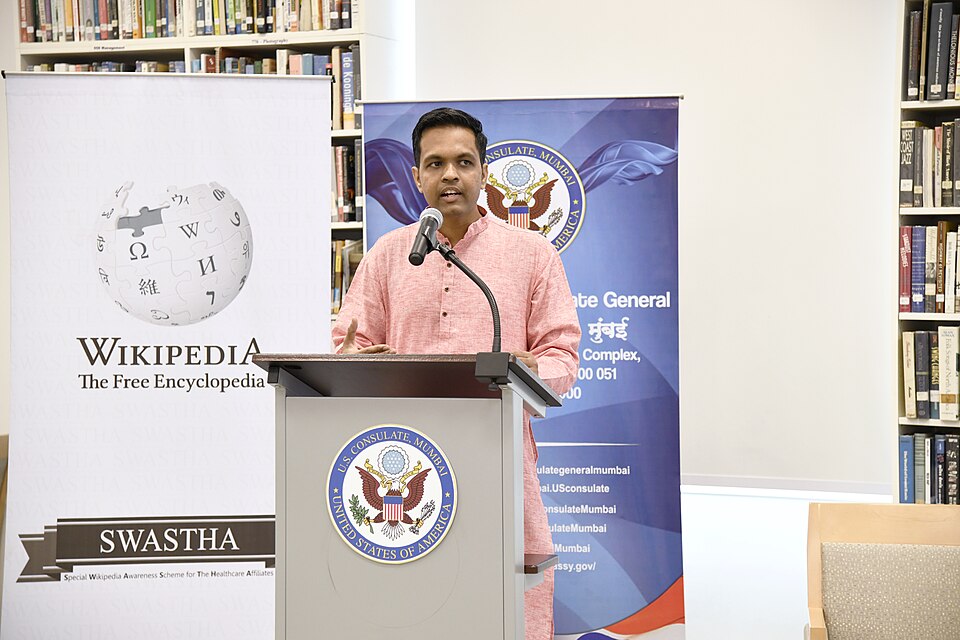
Over the years, SWASTHA has grown into a network of more than 50 contributors working across 10+ Indian languages. We have organized edit-a-thons at the US Consulate, partnered with medical institutions, and trained new Wikipedia editors who had never contributed before. The project has been covered by the Indian Express, NDTV, Hindustan Times, YourStory, and several other outlets.
"During COVID-19, Wikipedia in India saw 10x more traffic than the CDC and 300x more than government sites. Most of that traffic was looking for health information that did not exist in their language.
Wikipedia Culturalization
Translation alone is not enough. When you take a medical article written for an American audience and translate it into Hindi, you have not really made it accessible. The examples, the cultural references, the way symptoms are described, all of it needs to be adapted. A Wikipedia article about diabetes should mention the dietary patterns and risk factors relevant to South Asian populations, not just Western ones.
This is what I call "culturalization." It is the difference between content that technically exists in a language and content that actually serves the people who speak it. It is the philosophy behind everything I do on Wikipedia, and it extends to my work in AI, rare diseases, and language policy.
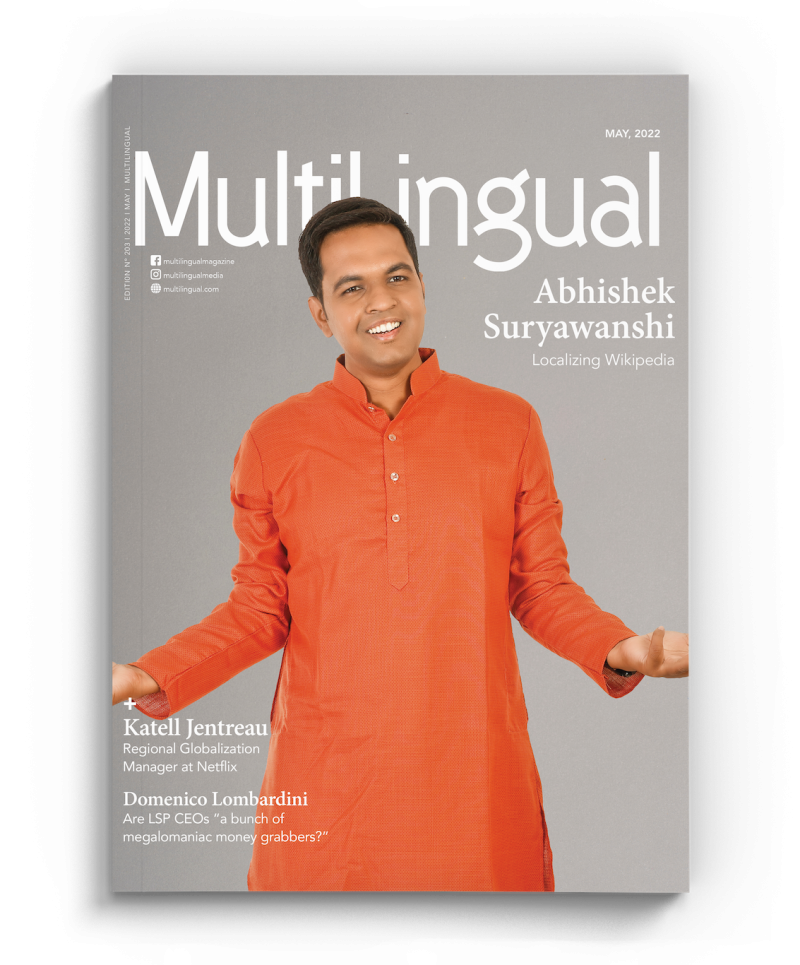
MultiLingual Magazine
In May 2022, MultiLingual Magazine featured Abhishek on their cover for his work in localizing Wikipedia's healthcare content across Indian languages. The feature explored how Project SWASTHA brought together doctors, linguists, and Wikipedia editors to make medical information accessible to India's 1.38 billion people in their own languages.
Read the Cover Story →Media Coverage
The Wikipedia and SWASTHA work has been featured in major Indian and international outlets.
Indian Express
How Wikipedia's Project SWASTHA is fighting the India Covid-19 infodemic
Read Article →YourStory
How Wikipedia's Project SWASTHA is bringing back Indic language content
Read Article →NDTV Gadgets 360
Wikipedia's Project SWASTHA: Fighting COVID-19 Misinformation in Indian Languages
Read Article →Hindustan Times
Wikipedia's SWASTHA project to help fight Covid-19 fake news in India
Read Article →Deutsche Welle
Wikipedia SWASTHA: Providing COVID-19 information in ten Indian languages
Read Article →MultiLingual Magazine
Abhishek Suryawanshi: Wikipedia's Man in India
Read Article →Wikimedia Foundation Governance
Beyond content creation, I have been deeply involved in how the Wikimedia movement governs itself. The Wikimedia Foundation is the nonprofit organization that operates Wikipedia and its sister projects, including Wikidata, Wikimedia Commons, and Wiktionary. Together, these projects serve billions of readers across 300+ language editions. The Foundation relies on community participation to make decisions about leadership, funding, and strategy.
Two of the Foundation's most important community-facing functions are its Board of Trustees elections and its grant-making programs. I have had the privilege of serving in leadership roles in both.
Elections Committee Chair
I chair the committee that oversees elections for the Wikimedia Foundation Board of Trustees, the governing body that sets the strategic direction for Wikipedia and all Wikimedia projects globally.
Grants Committee Member
As a member of the Grants Committee, I help evaluate funding proposals and direct resources to Wikimedia communities around the world, from edit-a-thons in Africa to capacity-building programs in Latin America.
How It All Started
I joined Wikipedia in 2009 as a college student in Pune, India. What started as curiosity about how an encyclopedia that anyone could edit actually worked turned into a lifelong commitment to free knowledge. In those early days, I focused on improving articles in Marathi and English, learning the community norms, and understanding how Wikipedia's volunteer ecosystem operated.
In 2011, I was among the first recruits of the Wikimedia Foundation's Wikipedia Education Program outside the United States. The program brought Wikipedia into university classrooms, training students to contribute quality content as part of their coursework. Being selected for this program connected me directly with the Foundation and gave me a front-row seat to how the global Wikimedia movement was expanding.
Building the Community in India
Wikipedia's 10th Anniversary in Pune
Organized and hosted the celebration of Wikipedia's 10th Anniversary in Pune, bringing together editors, academics, and enthusiasts to mark a decade of free knowledge.
Wikipedia Club Pune
Launched Wikipedia Club Pune to create a regular meeting space for editors and new contributors. The club became a hub for training, edit-a-thons, and community building in western India.
Wikipedia Summit Events
Hosted multiple Wikipedia Summit events across India, bringing together the country's growing editor community to share knowledge, coordinate on projects, and strengthen regional language Wikipedias.
Spoken Wikipedia & Local Editions
Championed Spoken Wikipedia to make knowledge accessible to people who prefer audio or have difficulty reading. Also focused on growing local language Wikipedias in Marathi, Hindi, and other Indian languages.
These early efforts laid the groundwork for everything that followed. By building a community of editors and contributors in India, we created the infrastructure that would later power larger initiatives like Project SWASTHA. The focus was always the same: languages and accessibility. Wikipedia should work for everyone, not just English speakers.
Explore all Wikipedia projects in detail →In the Wikimedia World
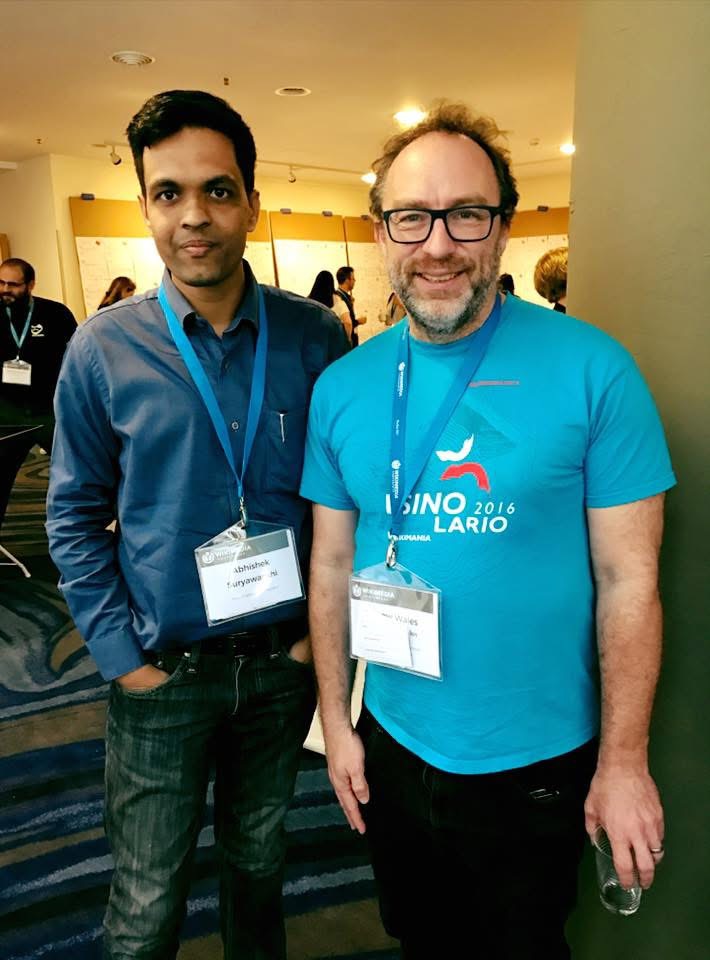
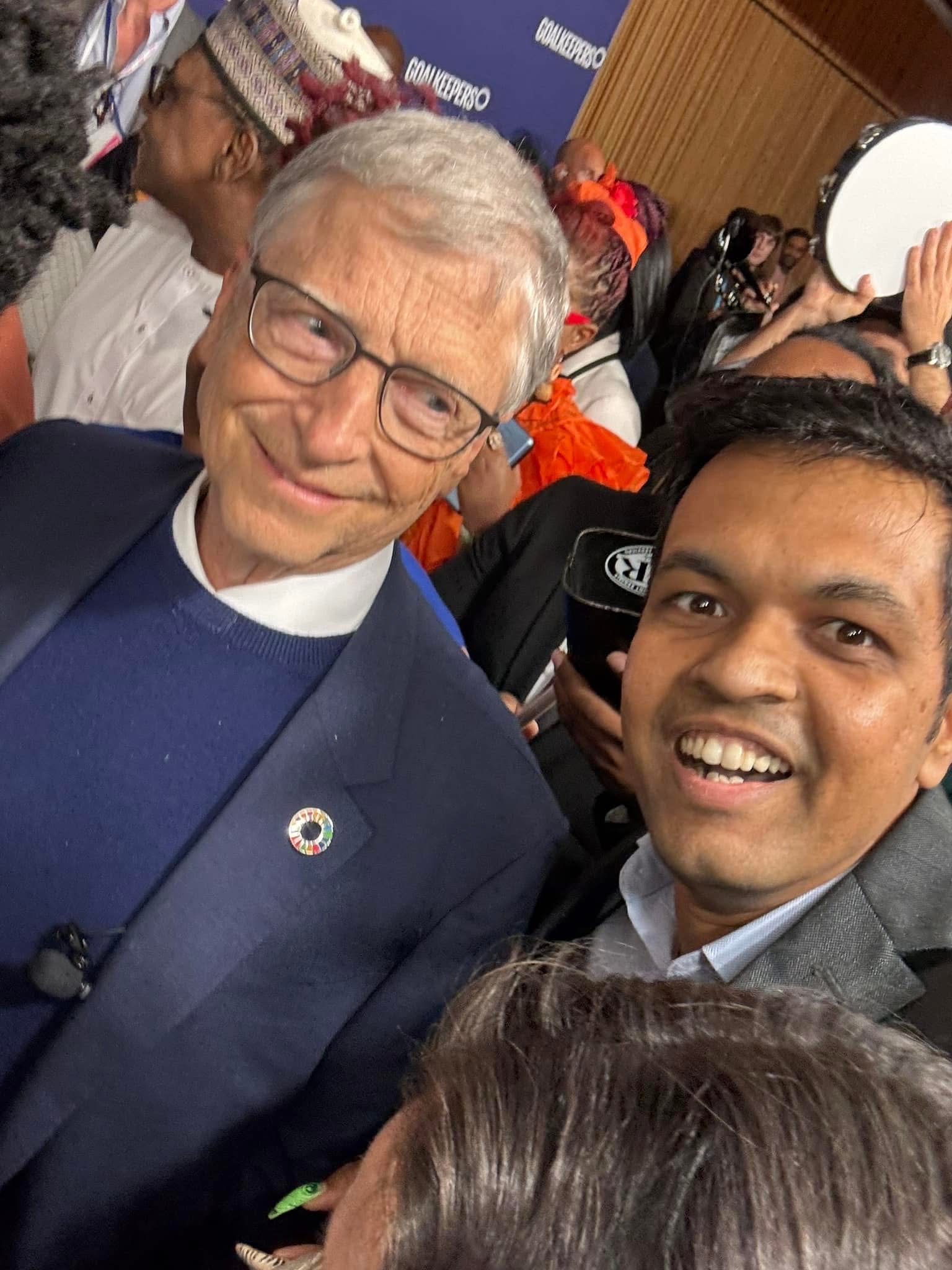
How This Connects
Wikipedia is where all the threads of my work come together. Healthcare knowledge, language access, AI tools, rare disease awareness. They all flow through the same mission: making knowledge free and accessible to everyone.
Wikipedia Projects
A closer look at every project: Wikipedia Club Pune, WikiConnect, Spoken Wikipedia, Wikipedia Summit, and more.
TED & TEDx
The TED Open Translation Project was my first experience bringing global ideas into local languages.
AI & Technology
AI tools are accelerating how we translate and culturalize Wikipedia content across languages.
Healthcare
SWASTHA, anosmia advocacy, mental health awareness, and Spoken Wikipedia all connect to the open knowledge mission.
Languages & Policy
Wikipedia localization connects directly to my work with the Government of Maharashtra on Marathi language policy.